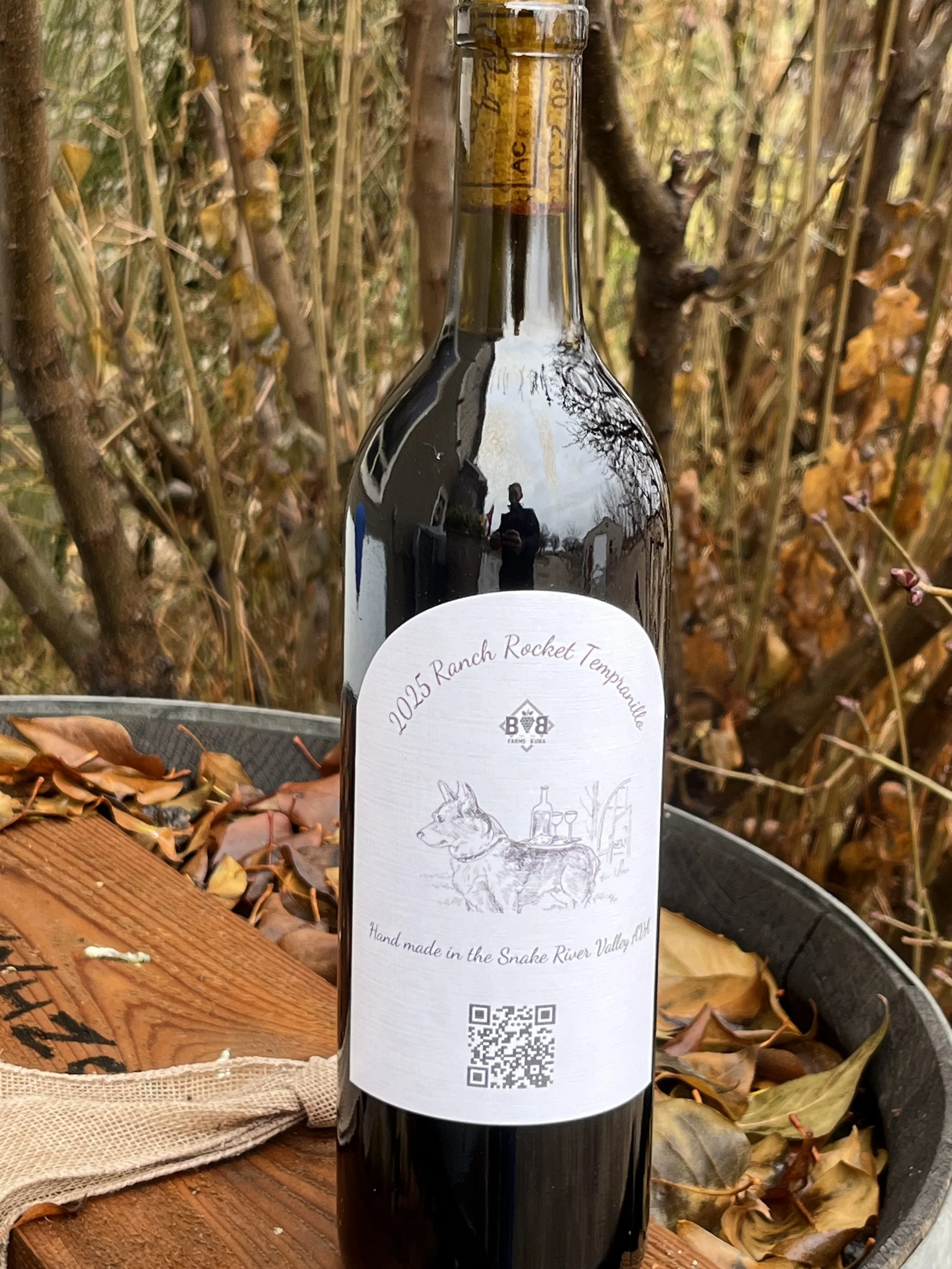

“I was given a bottle of B and B farms Tempranillo for Christmas and really enjoyed it! It was a well balanced medium bodied wine. James makes his own natural wine without additives, pesticides or cultured yeast. We have attended a couple events last year at B and B farms and really loved their venue! It’s the perfect setting for weddings, baby showers, reunions… and now Wine!! Highly recommend!”
-LC
“We picked no spray vegetables and they were all terrific. We also tried a bottle of the Tempranillo Wine. It was amazing. It had a very smooth finish and the flavors really stood out. It was also easy on my stomach. Some of the other wines I buy at the grocery store tend not to settle well with me.”
Dave C
“Love B&B farms so much. We have done 2 field trips there and James is such a wealth of knowledge and is so kind, knowledgeable and patient with the kids. Property is beautiful and his entire drive behind what he does is so palpable. He truly cares about what he does.”
-Lori S
Natural wine creations
“Natural wine is a type of wine made from fermented grape juice without the use of additives, pesticides, or herbicides, and typically produced using traditional methods. It emphasizes minimal intervention in both grape growing and winemaking processes, allowing the wine to express its natural characteristics.”
I suppose the term “traditional” is subjective in this case because it does not define the referenced time period. In our journey (always in motion) of wine growing and making we tend to blend (haha, get it?) both older and newer tasks to find a unique product that represents our brand.
As you can see, I harvest by hand but use an electric crusher de stemmer. I do not add any cultured yeast as nature provides yeast for us throughout the growing season. I use the hand driven fruit press to extract the juice from the fermented must. The wine is aged in stainless steel kegs where the grapes are allowed to “express themselves”.
In the 12 year life (planted 2013) of these vines, I have never had to spray any copper or other chemicals for pest or disease control. I am convinced this is because our farm flourishes within a system of poly culture (multiple crops within a space) or just simple co existence as nature intends. Plants seem to coexist in their natural habitat, do they not? If you’ve made it this far, thank you.
As of today (December 2025) we are in the process of obtaining our federal and state permits to provide this unique product to our friends and guests as requested, and to future friends and guests.
James Duxbury
(viticulturist, wine maker, seed grower, venue owner, farm chef, goat roper, land steward, tree hugger and grandpa)
When to pick.
This subject can go a million different directions, with and without technology. I do have a refractometer which measures brix (sugar) and can give the grower a good number of where the fruit is.
I have chosen to pick based on taste.
2025 Tempranillo
Crush pad
This is where the clusters are sorted, crushed and de stemmed. The grapes fall into the fermentation vessel and the stems separate to where they will go back onto the garden beds by means of the compost pile.
After a few weeks of fermenting, the must (seeds, stems and skins) gets pressed back into the fermentation vessel where it continues to ferment until the surface is calm.
Finished product ready to enjoy.